Welcome to the AI4NGOs Platform
- 00902126217973
- İstanbul, Türkiye
- info@ai4ngos.org


Welcome to the AI4NGOs Platform

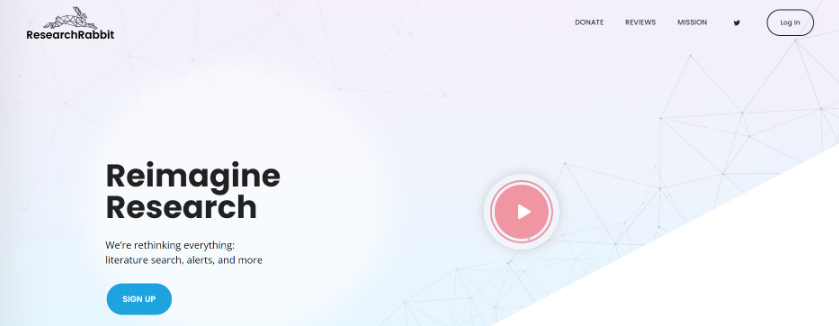
Research Rabbit is an application designed to simplify exploration of academic literature by organizing papers into personal collections and visualizing relationships between studies and authors. It relies on data from Semantic Scholar and displays citation networks through interactive maps, helping users understand how ideas evolve across the research landscape rather than reading each paper in isolation. It is available as a desktop-like application through WebCatalog for Windows and Mac, allowing a more focused and distraction-free workflow.
For humanitarian teams—especially research, MEAL, and advocacy units—Research Rabbit can help build thematic “evidence libraries” on topics like displacement, food insecurity, GBV, or health system resilience. Its network visualization helps identify the most influential papers, recurring authors, and foundational studies needed to support assessments or policy briefs. The tool also enables shared collections across team members, creating a collective knowledge base that supports collaboration on reports or evidence reviews. Through its recommendation engine, Research Rabbit introduces emerging studies and new directions in the literature, making it easier for teams to stay aligned with global research trends and design interventions grounded in recent evidence.
The application allows users to organize academic papers into collections and explore how studies connect through interactive visual maps. This makes it easier to understand research clusters, influential authors, and topic patterns. Its recommendation system relies on citation structures, improving the relevance of suggested papers for specialized humanitarian topics. It also supports collaborative work, where teams can share literature collections and jointly review evidence. Using it via WebCatalog creates a clean workspace separate from the browser, helping maintain focus during intensive literature reviews.
Since it functions through WebCatalog rather than a native standalone app, performance may be slightly limited. Its recommendation system depends heavily on citation patterns, which means new but important studies with few citations may not immediately appear.
Without Research Rabbit, you lose the ability to quickly see how studies connect within a topic, and you’ll need to manually track relationships, citations, and emerging papers. Your literature mapping becomes slower, scattered across multiple sources, and harder to organize into a coherent evidence base.
Free