Welcome to the AI4NGOs Platform
- 00902126217973
- İstanbul, Türkiye
- info@ai4ngos.org

Welcome to the AI4NGOs Platform

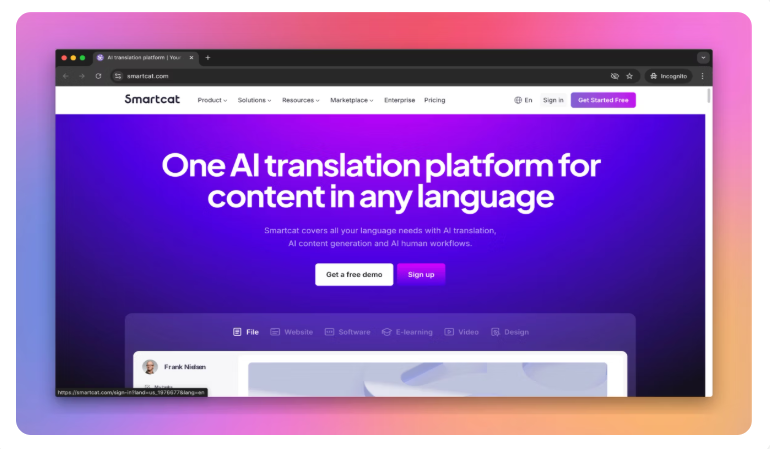
Smartcat is an AI-powered translation and localization platform that combines machine translation, human collaboration, and translation project management in a single cloud environment. It relies on technologies such as Translation Memory and terminology databases to ensure linguistic consistency across large projects. The platform also provides an integrated marketplace of professional translators, enabling a hybrid model that combines machine and human translation. It is designed to facilitate multilingual content management for organizations and enterprises. Smartcat supports a wide range of file formats including documents, presentations, and digital content, making it suitable for complex translation workflows. It also enables real-time collaboration between distributed teams, improving productivity and accelerating multilingual content delivery across different stakeholders and locations.
In humanitarian contexts, Smartcat is a strategic tool for accelerating multilingual content production in crisis settings. It can be used to translate humanitarian reports such as situation updates, needs assessments, and emergency response plans quickly while maintaining terminology consistency. This is critical in sectors like health, protection, WASH, and education, where inconsistent terminology may lead to operational misunderstandings. It also supports the creation of multilingual awareness materials for affected communities in languages such as Arabic, English, and Turkish, improving information accessibility. Additionally, Smartcat allows geographically dispersed teams to collaborate on the same documents simultaneously, which is essential in emergency responses. It reduces the need for repeated outsourcing of translation services, lowering costs and speeding up dissemination processes.
Smartcat offers a strong combination of AI and human review, improving translation quality compared to fully automated tools. Its Translation Memory reduces repetition and long-term costs, especially for recurring documents like periodic reports. It supports real-time collaboration, increasing productivity for distributed field and regional teams. It integrates with multiple file formats and tools such as Google Drive and content management systems. The built-in marketplace of professional translators allows optional human review for higher accuracy. It also helps standardize terminology across projects, which is essential in humanitarian work to avoid conceptual inconsistencies. Overall, it improves operational efficiency and significantly reduces multilingual content production time.
Machine translation quality may vary depending on language and text complexity, especially in Arabic. It requires some onboarding for non-technical teams. It may become relatively expensive for small organizations or heavy usage. It is also not specifically designed for the humanitarian sector, requiring internal adaptation.
$50–150 per month depending on usage.
Without Smartcat, humanitarian organizations may face slower multilingual content production and higher risks of inconsistent terminology across reports and sectors. This can delay publication of key donor or field reports. Translation outsourcing costs may increase, and coordination between multilingual teams becomes more difficult. In emergencies, these delays can negatively affect response speed and communication quality with affected communities.
DeepL Pro